


PIE Toolkit
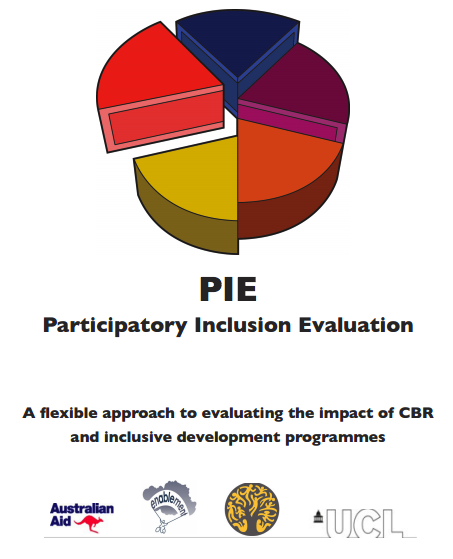
PIE is a new participatory approach for evaluating outcomes and impact of Community Based Rehabilitation (CBR) programmes. PIE provides a structured but flexible approach for collecting and analysing information about the real changes that CBR has had on the lives of people with disabilities. The PIE toolkit includes a range of tools (click for infographic): supports the whole evaluation process from planning; data collection (from a broad spectrum of CBR players), to data analysis, validation and report writing thus providing a very in-depth impact evaluation. However the approach is flexible so a selection of the tools can be chosen depending on the depth of information required and the specifications of the evaluation, context and resources available. The evaluation process is seen as one which provides an opportunity to learn about what is going well as well as what needs to change, so it leads into a process of future planning. Find here a snapshot of the entire process.
Find free downloads of the handbook and all tools below.
PIE Handbook
- Appendix 1: CBR Matrix: summary of goals and desirable outcomes with goals for component elements
- Appendix 2: Collecting and organising data
- Appendix 3: Interviewing techniques and group facilitation
- Appendix 4: Ethical considerations in evaluations and for evaluators
- Appendix 5: Background information on some key techniques used in evaluation and key references
- Stages in the process and tools summary
Stage 1 - Situational analysis – Collecting contextual info and about the CBR programme
- 1a. Big mapping task guide
- 1b. Timeline of disability and CBR activities
- 1c. Stakeholder mapping – circles of influence - instructions
- 1d. Document review summary
- 1e. Consultation planning form
Stage 2 - CBR team capability and performance review
Stage 3 – Listening to groups of stakeholders
Stage 4 – Listening to people with disabilities, parents & carers, individually and in groups
- 4a. Individual interview with people with disabilities, parents & carers – Topic guide
- 4b. Focus groups with people with disabilities/parents & carers – Topic guide
- 4c. Focus groups with children with disabilities – Topic guide/activities
- 4d. Story record sheet
- 4e. Consent forms - disabled children / photos
Stage 5 - Preliminary analysis of findings
- 5a. New evaluation framework
- 5b. Summary of 2a CBR manager interview data (including 5Cs) - excel
- 5c. Summary of 3a focus group discussions with Strategic Partners data - excel
- 5d. Summary of individual interviews with persons with disabilities data - excel
- 5e. Summary of focus group discussions with groups of persons with disabilities and children with disabilities data - excel
- 5f. Drawing spidergraphs of 5c findings - excel
- 5g. Summary of evaluation framework
Stage 6 - Community meeting to validate findings and look forward
- 6a. Draft outline of the validation and action planning meeting
- 6b. Summary form for validation meeting
- 6c. Validation meeting planning table
Stage 7 - Analysing and summarising findings, reporting and dissemination
Cross stage tools
March 2016: review from a senior advisor on Leprosy morbidity management and disability prevention:
"It is a wonderful TOOLKIT! You really did an excellent, detailed job on the process. Congratulations, it shows the years and years of work!"